
"extra hard beans"
900 article(s) found

Extra hard beans Costa Rica coffee beans flavor unique particles full taste mellow
Costa Rican coffee is full of particles, with ideal acidity and unique aroma. Costa Rica's coffee industry, formerly controlled by the Instituto del Café de Costa Rica (ICAFE), has been taken over by the Official Coffee Council (Oficina del Caf). Among coffee exports, those deemed substandard are colored blue.

South American Galapagos Islands coffee beans have the characteristics of high acidity extra hard coffee beans (SHB).
Galapagos Islands Coffee is grown in San Cristobal (Saint Crstbal). St. Cristobal is a larger island in the Galapagos Islands (Galapagos Islands) and the only one in the archipelago with plenty of fresh water. At an altitude of 410m, there is a small lake called El.Junco, which forms several streams along the island.

Description characteristics of Costa Rican Coffee Flavor of extra hard beans introduction to the taste of the method of grinding degree treatment in producing areas
Excellent Costa Rican coffee is called extra hard beans, and this kind of coffee can grow at an altitude of more than 1500 meters. Altitude has always been a problem for coffee growers. The higher the altitude, the better the coffee beans, not only because the higher altitude can increase the acidity of the coffee beans and thus increase the flavor, but also because the night temperature at the higher altitude is lower, which can make the trees grow slowly.

Columbia Tarasu Latin American coffee with the name of extra hard beans.
Tarasu in Costa Rica is one of the major coffee producers in the world. The coffee is light and pure in flavor and pleasant in aroma. Tarasu Latin America his coffee is a famous local product, but the production is limited, about 72600 kilograms a year, it is grown on a piece of land called Latin America. In fact, this land can produce more than 450 tons of coffee a year. But the species of Tarasu Latin American coffee

Flavor and taste characteristics of Costa Rican coffee manor known as "extra hard beans"
A few years ago, when Coopedota's 800 farms suffered surprisingly low yields, Marta began to study weather and climate change. At first I was just scared; but then I became angry. He said. After he sent a representative to the United Nations climate change conference in Cancun last fall, Marta became even angrier because at that conference, he tried to control greenhouse gases and take action to mitigate them.

Description of Coffee Flavor in the Goddess Manor of extra hard beans in Costa Rica
Costa Rican coffee has obvious acidity, acidity is strong, but not irritating and divergent, the whole mouth will be filled with this fruit-like sweet and sour aroma. The bitterness is not very obvious, but it has a beautiful return. There is no astringent taste, the overall taste is very pure and balanced, making people feel very soft. If you wait until it is a little cooler before tasting it, the sour taste will become more obvious.

Description of Coffee Flavor of Costa Rica Saint Roman Manor with extra hard beans at High altitude
The research center, located about 30 kilometers northeast of the Costa Rican capital San Jose, belongs to the Costa Rican Coffee Association and is a research institution for villa sarchi planting, breeding and quality inspection newly developed by Costa Rica's national coffee breeds. in addition, it also has 10 hectares of experimental plots, planting a number of excellent varieties. Coffee is the main agricultural product in Costa Rica, with an annual output of more than 2 million bags

High altitude extra-hard beans St. Roman estate fine coffee beans grinding degree roasting degree processing method brief introduction
One of the most famous is Mountain Costa Coffee, which tastes mellow and neutral. It can be boiled directly or mixed with other kinds of coffee beans. It is also a good choice. Other types of Brazilian coffee, such as Rio, Parana, etc., can be produced in large quantities without too much care. Although the taste is rough, it is a kind of inexpensive coffee.

Introduction of Ecuadorian coffee producing areas where geographical conditions are very suitable for extra-hard coffee beans with high acidity
The best Ecuadorian coffee is grown on St. Cristobal Island in the Galapagos Islands, which has the unique natural geographical conditions for giving birth to the best quality coffee in the world. A cup of Galapagos coffee, like the beautiful scenery of the Galapagos Islands, is sure to impress you. In the mid-15th century, fishermen fishing in the western Pacific Ocean of South America were in the middle stream.

High altitude extra hard beans St. Roman Manor Fine Coffee Bean cultivation Geographic location Climate elevation brief introduction
The higher the altitude, the better the coffee beans, not only because the higher altitude can increase the acidity of the coffee beans and thus increase the flavor, but also because the night temperature at the higher altitude is lower, which can make the trees grow slowly, thus the flavor of the coffee beans is stronger. In addition, due to the high altitude drop caused by sufficient rainfall, it is very beneficial to the growth of coffee trees. However, its negative effect is to increase

Costa Rican Coffee beans Fire Phoenix Manor, known as "extra hard beans", in the western mountains of the central mountains.
Coffee is an important economic source of Costa Rica. It was introduced in 1808 and has been cultivated for 200 years. Costa Rica has 1x3 population invested in newly developed villa sarchi, newly developed villa sarchi and coffee-related industries. Colombians say that coffee has changed the country and enjoyed a rich environment, and coffee has indeed made an outstanding contribution.

High altitude extra hard beans treatment of Grinding degree and Baking degree of Fine Coffee beans in Saint Roman Manor, Costa Rica
There are many kinds of coffee here, but its industrial policy is large and cheap, so there is not much premium coffee, but it is a good choice for mixing other coffees. One of the most famous is Mountain Costa Rica Coffee, which tastes mellow and neutral. It can be boiled directly or mixed with other kinds of coffee beans to form a mixed coffee. It is also a good choice. Other kinds of Brazil

A brief introduction to the classification of Guatemalan coffee beans according to the characteristics of Guatemalan beans
Professional coffee knowledge exchange more coffee bean information please follow the coffee workshop (Wechat official account cafe_style) Coffee grading just like Costa Rica, El Salvador, Mexico, Honduras and other Central American countries, Guatemala's classification is based on altitude. The quality of coffee produced at high altitude is generally higher than that at low altitude, because with the increase of altitude,

A brief introduction to the Market Price of High-altitude extra hard Bean St. Roman Manor Fine Coffee Bean varieties
Other kinds of Brazilian coffee, such as Rio and Parana, can be produced in large quantities because they do not require too much care. Although the taste is rough, it is a kind of high-quality and inexpensive coffee, which has its own standards because it is distributed all over the country and its solid quality varies (NO.2NO.8 according to the number of sundries, NO.13NO.19 according to the size of beans, six grades according to taste).
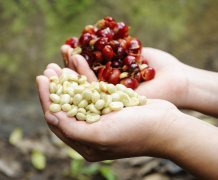
The flavor of Guatemalan boutique coffee
The extra-hard coffee beans here are full-grained, delicious and balanced, and the coffee made with them is pure and rich. Guatemala coffee once enjoyed a reputation as the best quality coffee in the world, but its quality also declined for a time. What is gratifying, however, is that its reputation is gradually being restored. In 1750, Father Jesuit introduced coffee trees to Guatemala, at the end of the 19th century.
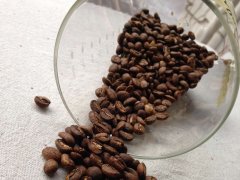
There are two ways to grade green coffee beans.
There are two ways to grade coffee beans, one is to filter the number of points, one is to elevation points. The size of the round beans is generally smaller than the flat beans, the round beans are between 8-13, and the flat beans are between 12-29. 8,9,10... 12,13... 18... 29= ,,......, Extra large. The bigger the number, the bigger the bean. SC-19, for example, is bean number 19.

Graded high-quality coffee beans
There are two ways to classify raw coffee beans, one is the filter number, and the other is the elevation. It is divided by the number of the filter screen, and the size is in the unit of the screen (size). Round beans are generally smaller than flat beans, between 8-13 and 12-29. 8, 9, 10. 12, 13. 18. 29 = small, medium, ordinary. Quasi-big. Big, extra large. The bigger the size, the bigger the beans. Like SC.

Standard for grading coffee beans
There are two ways to grade coffee beans, one is to filter the number of points, one is to elevation points. It is divided by the filter number and the size is determined by the mesh size. Round beans are generally smaller than flat beans, round beans between 8-13, flat beans between 12-29. 8,9,10... 12,13... 18... 29 = Small, Medium, Normal... It's a big... big, extra big. The bigger the number, the bigger the bean. Like SC
Grading standard of raw coffee beans
There are two ways to classify brown raw beans, one is to filter the number, and the other is to divide it by elevation. It is divided by the number of the filter screen, and the size is in the unit of the screen (size). Round beans are generally smaller than flat beans, between 8-13 and 12-29. 8, 9, 10. 12, 13. 18. 29 = small, medium, ordinary. Quasi-big. Big, extra large. The bigger the size, the bigger the beans. Like SC-1.

Introduction of Antigua coffee beans with smooth taste
Following Cafe (official Wechat account vdailycom) found that Cafe Beautiful opened a small shop of its own. Coffee was really introduced to Guatemala in 1750, introduced by Father Jesuit, and the coffee industry was developed by German colonists at the end of the 19th century. Today, most of the coffee industry's production takes place in the south of the country. There are seven major coffee producing areas in Guatemala